Airlines across the industry are investing heavily in artificial intelligence. From copilots and chatbots to disruption automation and predictive personalization, AI is expected to transform both operational efficiency and passenger experience.
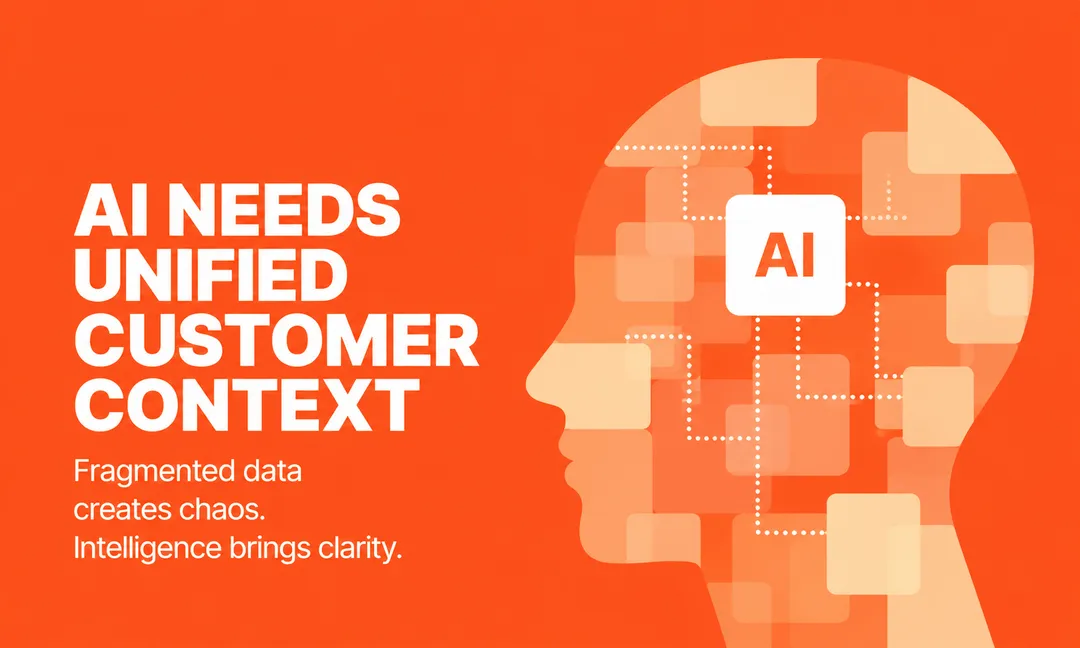
But many airlines are trying to scale AI on top of fragmented customer systems, and this creates a fundamental problem: AI does not eliminate fragmentation, it amplifies it.
When customer data remains disconnected across operational, commercial, and digital systems, AI lacks the context required to make accurate and reliable decisions in real time. As a result, automation becomes inconsistent, personalization becomes generic, and customer experience becomes unpredictable.
The issue is not the intelligence layer itself but the fragmented customer architecture underneath it.
Fragmented Systems Create Automation Chaos
Most airlines still operate across disconnected environments:
- PSS platforms
- loyalty systems
- airport operational systems
- booking engines
- customer support tools
- ancillary systems
- digital channels
- campaign platforms
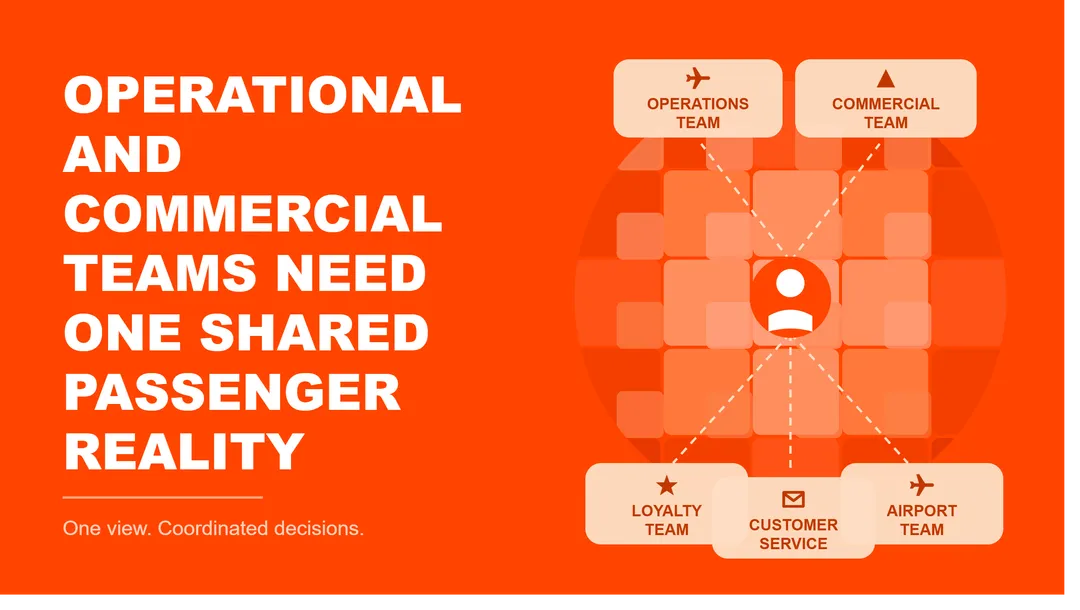
Each system understands part of the passenger journey, but none understands the journey as a whole. As airlines introduce AI into this environment, the fragmentation becomes even more visible.
A disruption engine may not understand customer value.
A recommendation engine may not understand operational limitations.
A chatbot may not understand the passenger’s current journey state.
A personalization engine may not know recent operational events affecting the customer.
Instead of orchestrating intelligent actions, AI begins generating disconnected decisions across channels and departments. This is where automation chaos begins.
Airline AI Requires Unified Passenger Context
Unlike many industries, airline customer environments are highly dynamic.
Passenger priorities constantly change depending on:
- operational disruptions,
- loyalty status,
- journey stage,
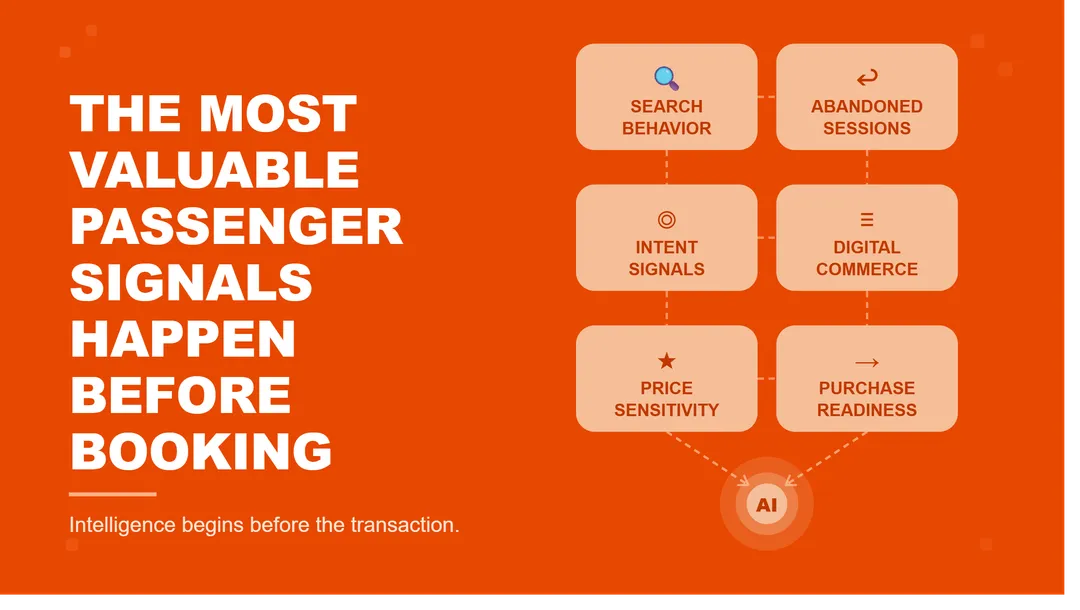
- behavioral intent,
- schedule sensitivity,
- and commercial value.
This means airline AI cannot rely on static profiles or isolated customer records; it requires unified passenger context.
Effective AI decisioning depends on the ability to combine:
- operational data,
- behavioral signals,
- booking activity,
- historical interactions,
- real-time journey status,
- customer value,
- and digital intent signals.
Without this, AI systems operate with incomplete situational awareness, and the result is fragmented automation with limited operational and commercial impact.
AI Without Context Cannot Deliver Next-Best-Action
One of the primary goals of airline AI is determining the next best action for every passenger in real time. But this is only possible when systems understand the full customer situation.
For example:
A high-value passenger affected by a delay may require:
- proactive rebooking,
- lounge access,
- operational prioritization,
- and personalized communication simultaneously.
A leisure traveler browsing ancillary offers before departure may require:
- different messaging,
- different timing,
- and entirely different commercial logic.
These decisions cannot be made effectively from isolated systems. They require a connected intelligence environment capable of continuously evaluating customer context across operational and commercial workflows.
Without unified context, AI recommendations become:
- reactive,
- inconsistent,
- generic,
- and often operationally disconnected.
The Real Foundation of Airline AI
The aviation industry often treats AI as the transformation layer. In reality, unified customer intelligence is the true foundation.
Before airlines can scale:
- intelligent automation,
- predictive operations,
- AI copilots,
- autonomous customer service,
- dynamic personalization,
- or revenue optimization,
they first need structured, connected, AI-ready passenger data: not simply larger volumes of data, but usable, real-time customer context.
This requires:
- identity resolution,
- behavioral tracking,
- operational event integration,
- unified passenger profiles,
- real-time enrichment,
- and cross-channel decision orchestration.
AI cannot compensate for fragmented customer environments; it depends entirely on the quality of the customer intelligence behind it.
Moving Beyond Data Storage
For years, many customer platforms focused primarily on collecting and storing customer data. Modern airline AI requires something fundamentally different: customer intelligence activation.
Airlines must be able to:
- translate passenger signals into actions,
- coordinate decisions across departments,
- personalize interactions dynamically,
- and continuously optimize operational and commercial workflows in real time.
The future is no longer about storing customer information; it is about operationalizing customer intelligence.
Why Unified Customer Intelligence Will Define Airline AI Success
As AI adoption accelerates across aviation, competitive advantage will not come from deploying the largest number of AI tools but from building the most connected customer intelligence environment.
The airlines that succeed will be those capable of:
- understanding passengers holistically,
- orchestrating decisions contextually,
- aligning operations and commerce together,
- and enabling AI systems to act with real-time situational awareness.
Because in aviation, AI without customer context does not create intelligence. It creates chaos.