Airline customer experience is often measured around operational moments:
- check-in,
- boarding,
- delays,
- baggage,
- and inflight service.
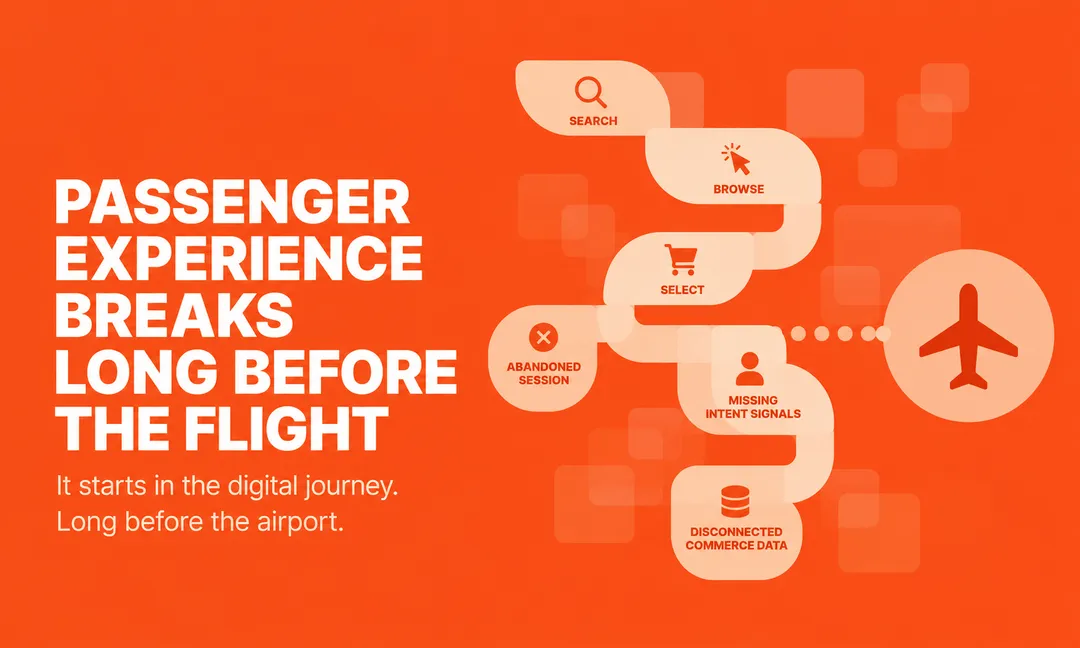
But for many passengers, the experience begins breaking long before the flight itself. It breaks during the digital journey: before booking, before check-in, before the airline even recognizes the customer.
Today’s airline customer journey spans:
- websites,
- mobile apps,
- metasearch platforms,
- partner channels,
- OTAs,
- remarketing campaigns,
- and multiple booking sessions across devices.
Yet most airlines still lack a unified understanding of how passengers move across these environments.
As a result, valuable customer intent disappears before meaningful engagement can happen.
Airlines Lose Visibility Before the Booking Happens
Most digital airline environments are heavily fragmented.
Customer interactions are distributed across:
- booking engines,
- websites,
- mobile apps,
- payment flows,
- ancillary systems,
- loyalty platforms,
- and third-party channels.
Each platform captures part of the customer journey, but none captures the full behavioral picture. This creates a major visibility problem.
Airlines may know when a booking is completed, but they often do not understand:
- what the passenger searched for,
- which offers were considered,
- what caused abandonment,
- which channel influenced the decision,
- or how intent evolved before purchase.
The result is a disconnected digital commerce environment with limited customer intelligence.
Abandoned Booking Intent Is Often Invisible
One of the largest hidden revenue losses in airline digital commerce comes from abandoned booking sessions.
Passengers frequently:
- search routes,
- compare schedules,
- evaluate ancillaries,
- review fares,
- and begin checkout processes,
only to leave without completing the purchase.
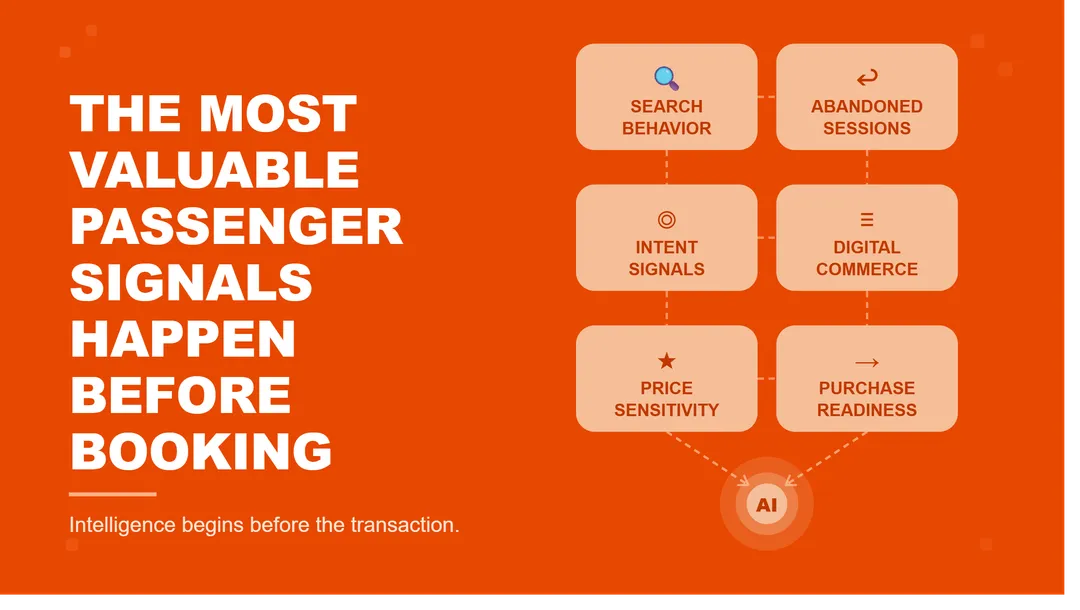
In many cases, these signals disappear completely once the session ends. This is a critical missed opportunity, because abandoned sessions are not simply lost transactions; they are high-value intent signals.
They reveal:
- travel interest,
- pricing sensitivity,
- route demand,
- ancillary preferences,
- timing behavior,
- and channel patterns.
Without capturing and activating these signals, airlines lose both revenue opportunities and customer understanding.
Passenger Experience Depends on Connected Digital Context
Modern passengers expect continuity across the entire digital journey.
They expect airlines to:
- recognize them across channels,
- understand previous interactions,
- maintain contextual relevance,
- and communicate intelligently throughout the booking process.
But fragmented systems make this difficult.
A passenger may:
- browse on mobile,
- continue on desktop,
- engage with an email,
- return through a metasearch platform,
- and eventually contact support before booking.
Without connected customer intelligence, each interaction becomes isolated. The experience feels inconsistent and impersonal, and passengers are forced to restart journeys repeatedly across channels. This is where digital customer experience begins to break.
Digital Commerce Requires Behavioral Intelligence
Traditional airline commerce systems were designed primarily for transactions, but modern digital customer experience depends on behavioral understanding.
Airlines now need visibility into:
- search behavior,
- navigation paths,
- booking hesitation,
- ancillary interest,
- channel switching,
- and real-time customer intent.
Behavioral intelligence transforms digital interactions into actionable customer context.
It allows airlines to:
- recover abandoned demand,
- personalize offers dynamically,
- optimize communication timing,
- and improve conversion across channels.
Without behavioral intelligence, personalization remains generic and reactive.
Customer Experience Starts Before the Passenger Exists in the PSS
One of the biggest limitations in airline customer intelligence is that many systems begin tracking the customer only after booking. But customer experience starts much earlier. It starts:
- during inspiration,
- during search,
- during fare comparison,
- during hesitation,
- and during digital exploration across channels.
This pre-booking phase contains some of the most valuable customer intent signals in the entire journey.
The airlines that succeed in digital commerce will be those capable of understanding customers before the transaction itself happens, not just after.
The Future of Airline CX Is Pre-Booking Intelligence
As competition across digital channels increases, airlines can no longer rely solely on operational service quality to differentiate customer experience.
Customer experience now begins with:
- connected digital journeys,
- unified behavioral intelligence,
- real-time intent visibility,
- and contextual engagement before booking.
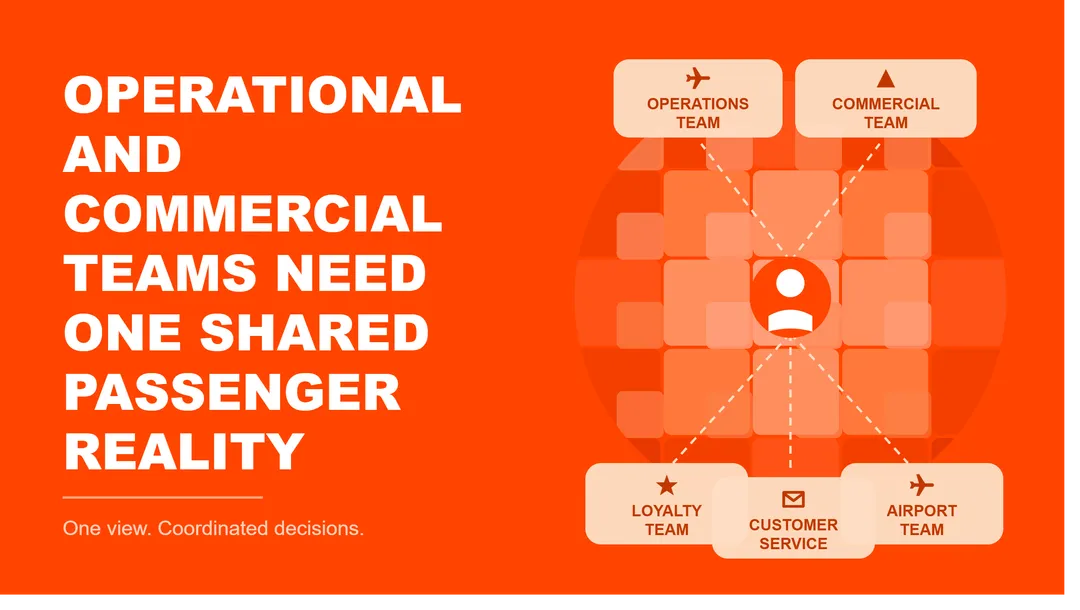
The future of airline CX will depend on the ability to connect:
- digital behavior,
- commerce activity,
- operational systems,
- and customer identity into one continuous intelligence environment.
Because passenger experience does not begin at the airport; it begins long before the flight.