For years, airline ancillary revenue strategies focused primarily on product availability: seats, baggage, priority boarding, lounge access, upgrades, insurance, partner offers.
The assumption was simple: the more offers airlines expose to passengers, the more revenue opportunities they create.
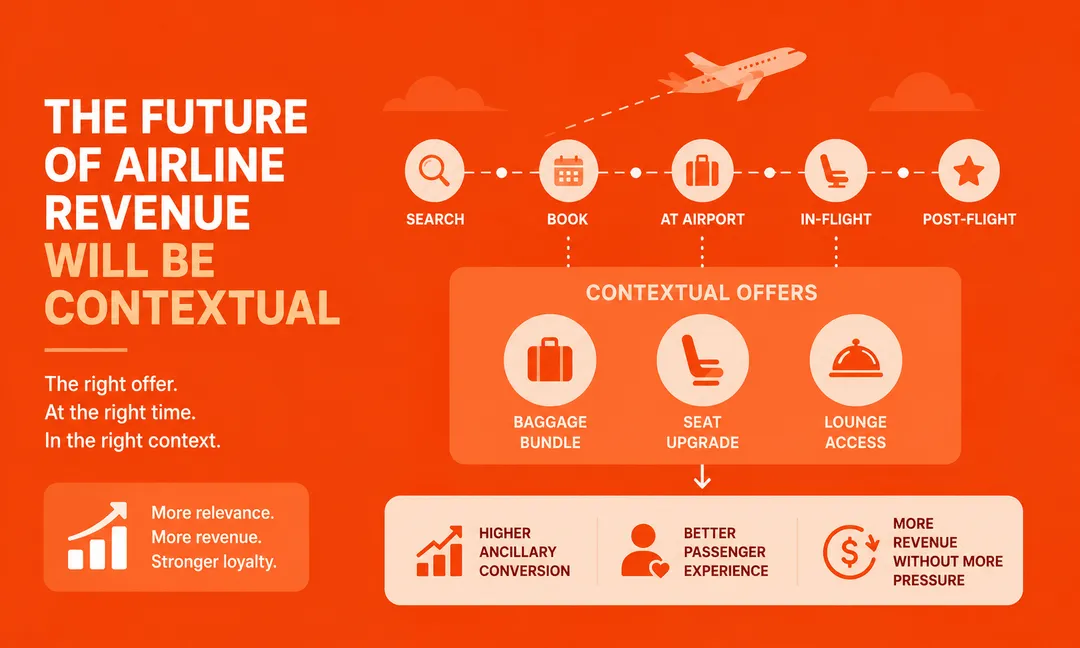
But passenger expectations and digital behavior have changed significantly. Today, revenue growth depends less on the number of offers presented and more on the relevance of those offers within the customer’s current context. The future of airline revenue is becoming contextual.
Passengers Respond to Relevance, Not Volume
Modern passengers interact with airlines continuously across:
- websites,
- mobile apps,
- booking flows,
- operational touchpoints,
- loyalty channels,
- and digital communications.
At every stage of the journey, customer priorities evolve. A passenger searching for family travel may value baggage flexibility. A business traveler facing disruption may prioritize speed and convenience. A loyalty passenger may respond differently depending on journey importance or operational conditions.
Static offer logic cannot fully adapt to these situations, and passengers increasingly ignore generic promotions and repetitive campaigns. But they engage strongly with offers that feel:
- timely,
- relevant,
- contextual,
- and behaviorally aligned.
This creates a major opportunity for airlines, because revenue optimization is shifting from mass selling toward intelligent relevance.
Timing Is Becoming a Revenue Capability
The same offer can perform very differently depending on when it is presented. A seat upgrade before check-in may feel unnecessary; the same upgrade during a full flight or operational disruption may become highly relevant. A baggage offer immediately after fare selection may convert effectively, while the same message after payment may create friction.
This means ancillary monetization increasingly depends on:
- journey timing,
- operational conditions,
- behavioral signals,
- and customer intent.
Revenue opportunities are no longer static; they evolve dynamically throughout the customer journey. Airlines that understand this can significantly improve conversion efficiency without increasing communication volume.
Behavioral Intelligence Changes Revenue Strategy
Traditional airline commerce systems were designed around transactions, but modern digital commerce increasingly depends on behavioral understanding.
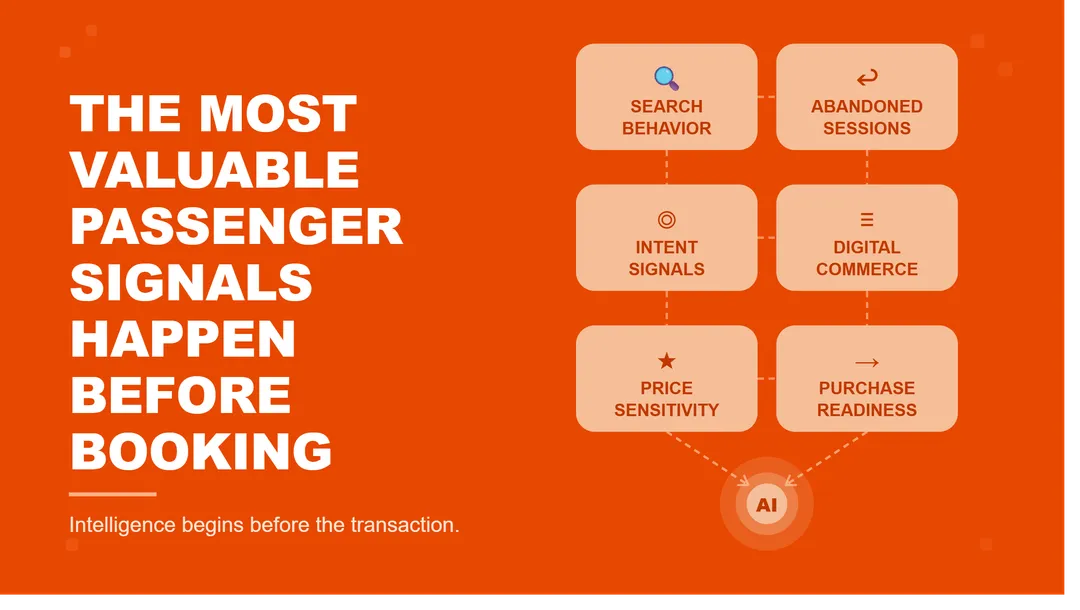
Airlines now have the ability to evaluate:
- browsing patterns,
- abandoned selections,
- ancillary interest,
- booking hesitation,
- search behavior,
- loyalty engagement,
- and real-time customer intent signals.
These signals provide important commercial context. They allow airlines to determine:
- which offers are most relevant,
- when engagement should happen,
- which passengers are most likely to convert,
- and what level of communication is appropriate.
Behavioral intelligence transforms ancillary sales from reactive promotion into intelligent customer engagement.
Next-Best-Action Is Becoming Commercial Infrastructure
As airline ecosystems become more connected, revenue optimization is increasingly shifting toward next-best-action decisioning. This means systems continuously evaluate:
- customer behavior,
- operational context,
- commercial opportunity,
- and journey stage in real time.
Instead of distributing the same offers broadly, airlines can dynamically orchestrate:
- upgrades,
- ancillary bundles,
- loyalty incentives,
- service enhancements,
- and partner offers based on contextual relevance.
This creates a more natural customer experience: passengers receive fewer irrelevant interactions, and airlines improve commercial efficiency simultaneously. The goal is not more selling pressure but more intelligent revenue activation.
Contextual Commerce Creates Better Customer Experience
One of the biggest advantages of contextual commerce is that it improves both revenue performance and customer experience at the same time.
Passengers increasingly expect airlines to:
- understand their situation,
- recognize journey context,
- and communicate intelligently across channels.
When offers feel aligned with the customer’s actual needs, engagement becomes more valuable and less intrusive. This reduces:
- communication fatigue,
- repetitive marketing pressure,
- and irrelevant engagement.
At the same time, airlines gain opportunities to:
- increase ancillary conversion,
- improve passenger satisfaction,
- strengthen loyalty,
- and maximize revenue per passenger more efficiently.
Contextual commerce creates alignment between commercial goals and customer relevance.
The Future of Airline Revenue Is Intelligent Relevance
As competition across airline digital channels continues increasing, revenue growth will depend less on expanding offer catalogs and more on improving customer understanding.
The airlines that succeed will be those capable of:
- evaluating customer context continuously,
- understanding behavioral intent,
- orchestrating interactions dynamically,
- and activating commercial opportunities in real time.
Future airline revenue systems will not operate as static sales engines; they will operate as intelligent decision environments. Modern passengers do not respond to volume alone. They respond to relevance delivered at the right moment, within the right context, across the right stage of the journey.