
For decades, the airline industry has viewed the corporate traveler through a narrow lens: the ticket price and the immediate ancillary sale. While the B2B segment represents a significant portion of high-yield revenue, the focus on transactional upselling (a checked bag here, a seat upgrade there) fundamentally misunderstands the true value of the corporate relationship.
The future of corporate travel profitability lies not in maximizing the single transaction, but in unlocking the Total Lifetime Value (LTV) of the corporate traveler.
The Problem with Transactional Ancillaries
In the B2C world, ancillary sales are a powerful revenue driver. In the B2B context, however, they often create friction. Corporate travelers are bound by policy, and their primary goal is efficiency, not personalization for its own sake. A poorly timed or irrelevant ancillary offer can feel like an obstacle, not a service, eroding the very trust that underpins long-term corporate contracts.
Furthermore, focusing solely on the traveler’s wallet ignores the value of the data they generate and the influence of the corporate travel manager who controls the volume.
Shifting to a Holistic View
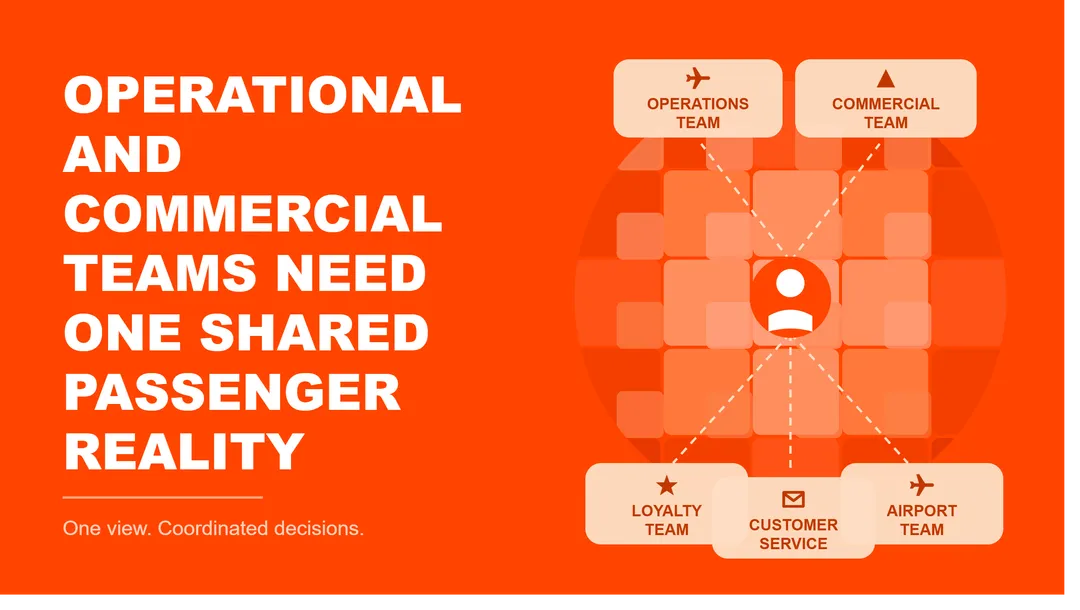
To unlock Total LTV, airlines must shift their focus from the individual purchase to the entire travel ecosystem surrounding the corporate passenger. This requires a specialized Customer Data Platform (CDP) that can seamlessly integrate three distinct data streams:
Traveler Profile Data: Personal preferences, loyalty status, past travel history, and known pain points (e.g., frequent delays on a specific route).
Corporate Policy Data: The traveler’s specific company’s travel policy, budget limits, preferred vendors, and approval workflows.
Expense and Post-Trip Data: Information from expense management systems and post-trip surveys, which reveals the true cost and satisfaction level of the journey.
When these three streams converge, the airline gains a holistic, 360-degree view that transforms the value proposition.
The New Corporate Value Proposition
This holistic view allows airlines to move beyond simple upselling and deliver high-value, integrated services that benefit both the traveler and the corporation:
Proactive Policy Compliance: Instead of selling an out-of-policy upgrade, the airline can proactively offer a policy-compliant, premium experience (e.g., a free lounge pass after a long flight) that enhances satisfaction without violating corporate rules.
Integrated Cost Management: By understanding the corporate budget in real-time, the airline can offer bundled services that simplify expense reporting and provide the travel manager with superior cost control and transparency.
Personalized Disruption Management: When a flight is delayed, the system knows the traveler’s corporate meeting schedule and automatically rebooks them onto a policy-compliant alternative, communicating the change directly to the traveler and the travel manager simultaneously.
By focusing on efficiency, compliance, and predictive service rather than just transactional ancillaries, airlines transform themselves from a commodity vendor into a strategic partner. This deep integration is the key to securing long-term, high-volume corporate contracts and truly unlocking the Total Lifetime Value of the corporate traveler.