
The future of airline profitability and customer satisfaction lies in the Proactive Pivot: using predictive analytics to eliminate costly failures before they happen, thereby freeing up resources to invest directly in the traveler’s journey.
The Cost of the Reactive Model
In the reactive model, operational failures cascade:
Predictive Maintenance: An unexpected engine component failure grounds an aircraft. The cost is not just the repair, but the cascading delays across the network, the crew re-scheduling fees, and the compensation paid to hundreds of stranded passengers.
Disruption Management: A sudden weather event causes a ground stop. The reactive response is manual re-booking, long call center wait times, and frustrated passengers who feel abandoned. The cost is high in both dollars and eroded trust.
In both scenarios, the operational cost is directly translated into a negative customer experience.
The Proactive Pivot: Two Key Areas
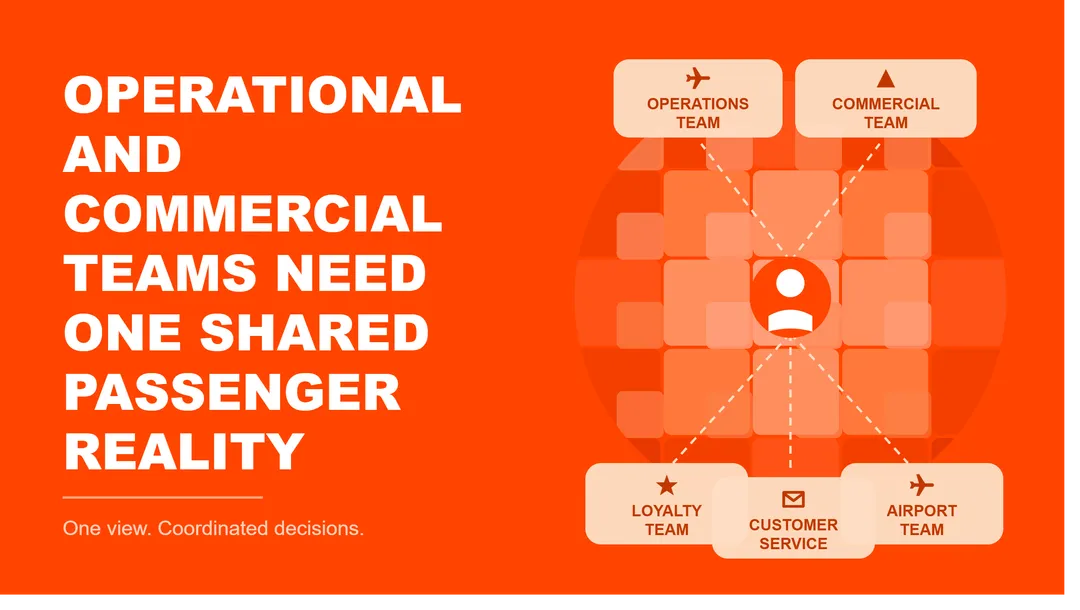
Predictive analytics, powered by a specialized Customer Data Platform (CDP) that integrates operational and customer data, transforms this equation. It allows airlines to move from cost-avoidance to value-creation in two critical areas:
1. Predictive Maintenance as a Customer Benefit
By analyzing sensor data, flight history, and maintenance logs, airlines can predict component failure with high accuracy.
Operational Gain: Maintenance is scheduled precisely when needed, reducing unnecessary labor, optimizing inventory, and maximizing aircraft uptime. This directly lowers operational costs.
Customer Value: Fewer unexpected mechanical delays mean higher on-time performance and more reliable scheduling. The traveler experiences a seamless journey, and the airline avoids the high cost of disruption. The saved operational expense is reinvested in a better product.
2. Predictive Disruption Management
Predictive models can forecast potential delays and cancellations hours before they become critical, integrating weather patterns, crew availability, and gate congestion data.
Operational Gain: Operations teams can proactively adjust flight rotations, re-route aircraft, or pre-position crew, minimizing the ripple effect of a localized event. This drastically reduces the cost of recovery.
Customer Value: The airline can communicate with affected passengers before they leave for the airport. A passenger receiving a proactive text with a re-booked flight and a voucher for a meal feels valued and informed, not abandoned. The cost of a proactive voucher is far less than the cost of a lost customer.
The New Equation for Success
The Proactive Pivot is not just about saving money; it’s about using data to align operational efficiency with customer success. When an airline reduces its operational costs through predictive intelligence, it simultaneously delivers a more reliable, less stressful, and ultimately more valuable experience to the traveler.
The intelligence layer is the engine that converts operational savings into customer loyalty.