For years, airline personalization was built around segmentation.
Passengers were grouped into broad categories:
- business travelers,
- leisure travelers,
- loyalty members,
- frequent flyers,
- or price-sensitive customers.
Offers and communications were then distributed based on these predefined groups.
This approach worked when customer expectations were simpler and digital interaction was limited. But airline customer behavior has fundamentally changed.
Today’s passengers interact across:
- websites,
- mobile apps,
- booking engines,
- ancillary flows,
- loyalty channels,
- and operational touchpoints continuously.
Their expectations evolve in real time throughout the journey. As a result, generic personalization is no longer enough; passengers now expect relevance, timing, and contextual understanding.
Modern Passengers Do Not Behave Like Static Segments
A passenger’s intent can change multiple times within a single journey.
The same traveler may:
- browse premium upgrades before departure,
- become highly price-sensitive during booking,
- prioritize speed during disruption,
- and value convenience after arrival.
Static segmentation cannot capture these changes effectively. Modern passenger behavior is dynamic; it depends on:
- journey stage,
- operational context,
- behavioral signals,
- digital activity,
- loyalty relevance,
- and real-time customer needs.
This creates a major opportunity for airlines, because personalization is no longer about assigning passengers into categories; it is about continuously understanding customer context as it evolves.
Personalization Is Becoming Contextual
Traditional personalization focused mainly on:
- demographic attributes,
- historical purchases,
- and predefined campaign rules.
But modern airline personalization increasingly depends on live behavioral intelligence.
Airlines now have the ability to understand:
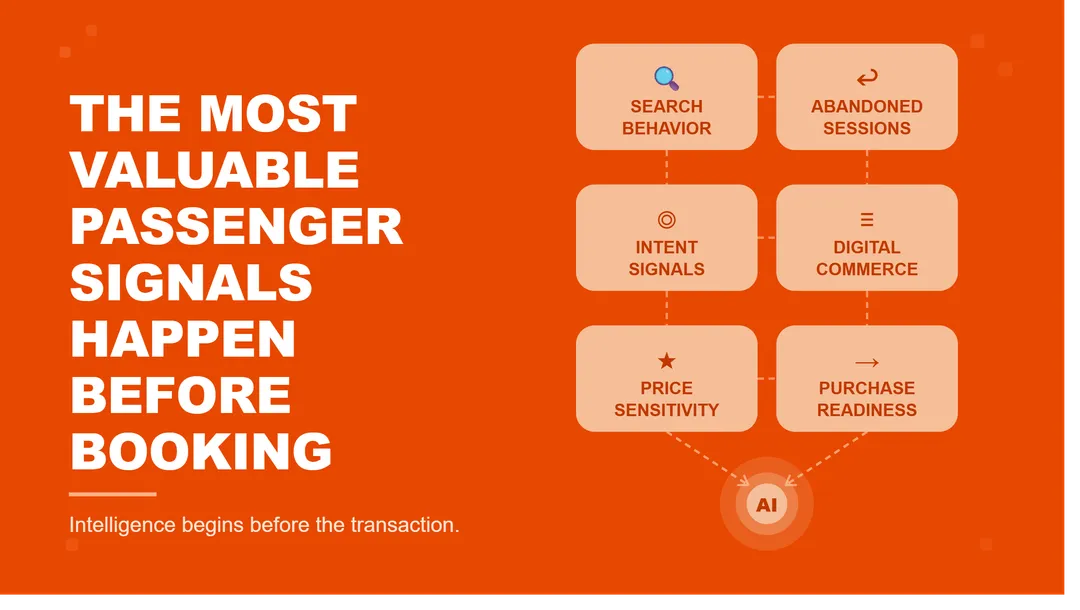
- what passengers search for,
- how they navigate digital channels,
- which offers they engage with,
- how journey conditions affect decisions,
- and when intent changes in real time.
This allows personalization to become:
- contextual,
- adaptive,
- operationally aware,
- and behavior-driven.
Instead of generic mass communication, airlines can move toward intelligent relevance across the journey.
Relevance Creates Better Commercial Performance
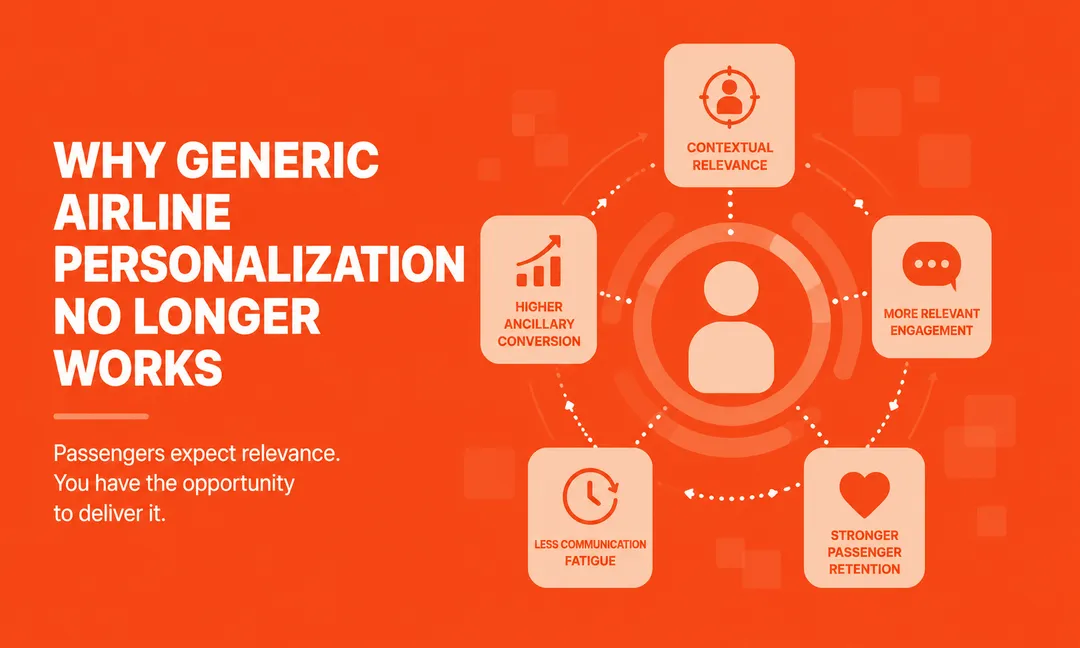
Passengers are increasingly exposed to high volumes of digital communication. Generic messaging creates fatigue, irrelevant offers reduce engagement, and poorly timed campaigns lower conversion rates. But contextual personalization creates measurable business value.
When airlines deliver offers based on:
- real-time journey stage,
- behavioral intent,
- operational conditions,
- and customer preferences,
passengers are far more likely to engage.
This creates opportunities for:
- higher ancillary conversion,
- stronger passenger retention,
- improved engagement quality,
- and reduced communication overload.
The goal is not more communication but more relevant communication.
Real-Time Personalization Requires Connected Intelligence
Many airlines still personalize through disconnected systems.
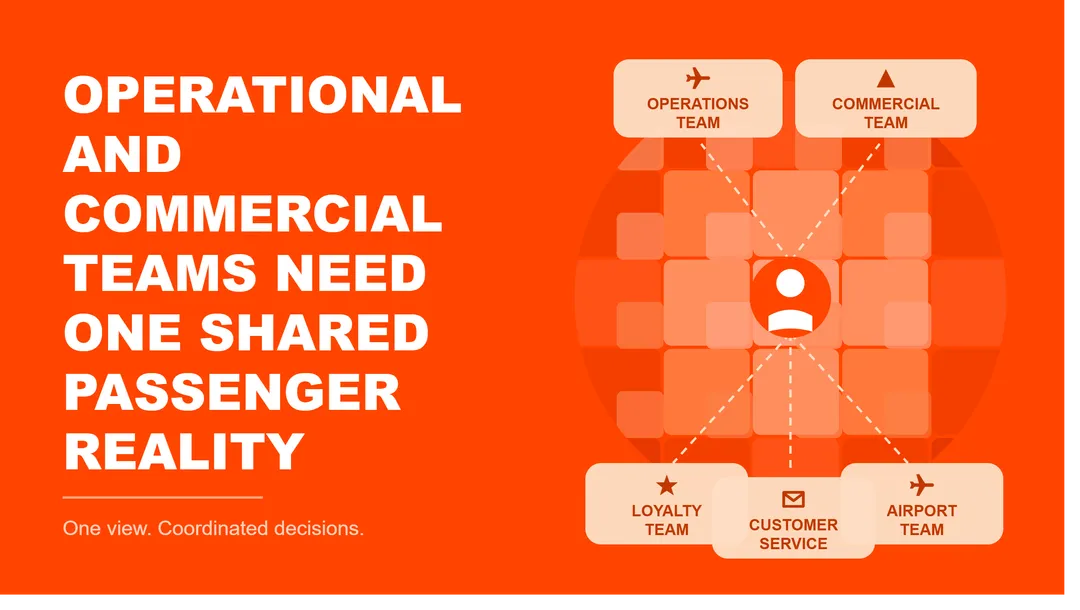
Marketing platforms, loyalty systems, operational systems, and digital channels often function independently from one another.
As a result:
- customer understanding becomes fragmented,
- personalization becomes inconsistent,
- and passenger interactions lose continuity.
Effective personalization requires unified customer intelligence.
Airlines must be able to connect:
- operational data,
- behavioral signals,
- loyalty context,
- booking activity,
- and digital interactions into one continuously updated customer view.
This allows systems to determine:
- what interaction is most relevant,
- when engagement should happen,
- which channel should be used,
- and what commercial opportunity exists in the current context.
The Future of Airline Personalization Is Intelligent Relevance
The future of airline personalization will not be defined by larger campaigns or broader segmentation models. It will be defined by intelligent relevance.
The airlines that succeed will be those capable of:
- understanding customer behavior continuously,
- adapting interactions dynamically,
- coordinating communication across channels,
- and aligning personalization with real-time operational context.
Passengers no longer expect generic offers. They expect airlines to understand where they are, what they need, and what matters in the current moment. This is where personalization is heading: not toward more automation alone, but toward more intelligent customer understanding.
Personalization Is Becoming a Competitive Advantage
As airline digital ecosystems continue evolving, personalization is shifting from a marketing feature into a strategic capability.
Airlines that build connected customer intelligence environments will be able to:
- create more valuable customer relationships,
- improve digital conversion,
- strengthen loyalty,
- and increase revenue efficiency without increasing communication pressure.
Because modern personalization is no longer about targeting segments; it is about delivering relevance at the right moment, in the right context, across the entire customer journey.