Artificial intelligence has become one of the aviation industry’s highest priorities.
Airlines are investing in:
- predictive analytics,
- intelligent automation,
- customer service copilots,
- dynamic pricing,
- personalization,
- and operational optimization.
Yet one misconception continues to shape many AI initiatives: the belief that better AI starts with more data.
In reality, most airlines already have the information they need. The real opportunity lies in making that information work together.
Airlines Are Rich in Data
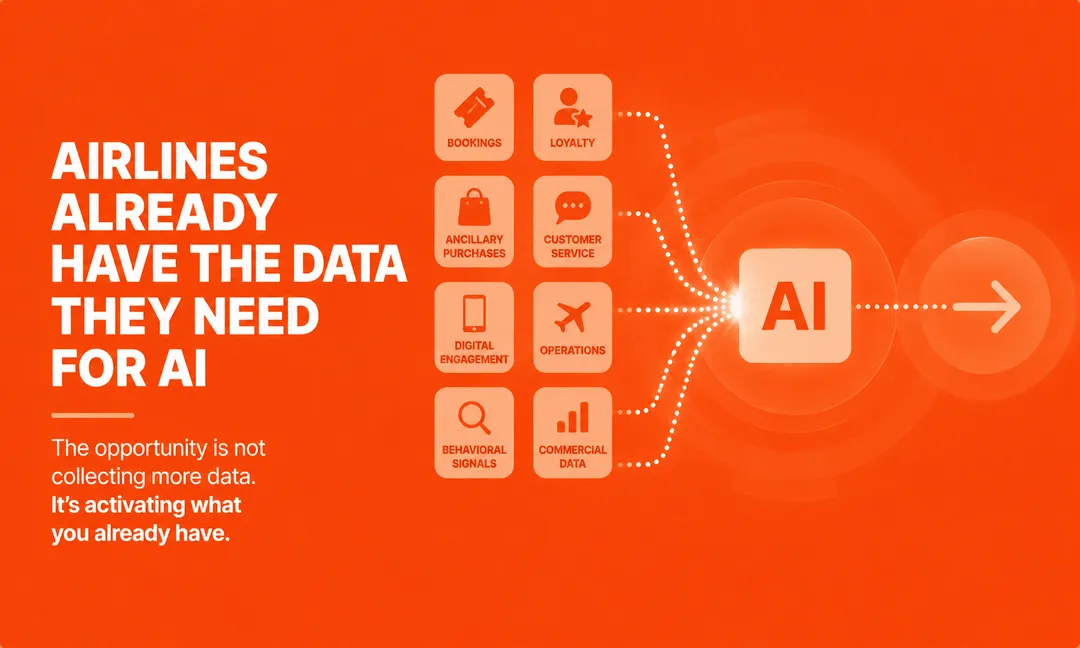
Every day airlines generate millions of customer and operational signals.
These include:
- bookings,
- loyalty activity,
- ancillary purchases,
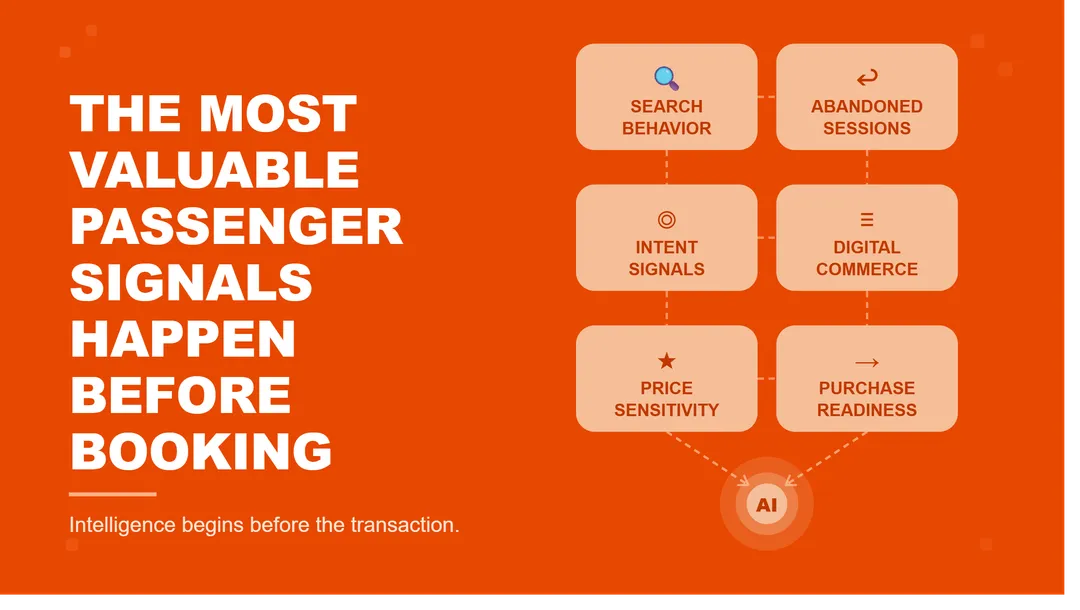
- website interactions,
- mobile engagement,
- disruption events,
- airport operations,
- customer service conversations,
- and digital behavior.
Very little of this information is missing. In fact, the challenge is often the opposite: airlines have more data than ever before, and the question is how to activate it.
AI Readiness Starts With Connected Systems
Artificial intelligence is only as effective as the context it receives.
If customer, operational, and commercial systems remain disconnected, AI can only optimize isolated decisions. It cannot understand the full customer journey.
A recommendation engine may understand purchasing behavior, an operational platform may understand flight status, and a loyalty system may understand customer value. But real intelligence emerges only when these perspectives come together.
AI readiness is not defined by data volume; it is defined by connected intelligence.
Data Should Move, Not Sit
For many years, customer platforms focused on storing information. Today, the focus is shifting toward activation.
Modern airline organizations need customer intelligence that moves with the passenger. Information should not remain inside isolated databases.
It should continuously support:
- customer engagement,
- operational decisions,
- commercial opportunities,
- and real-time service delivery.
Data becomes valuable only when it influences action.
Orchestration Creates Intelligence
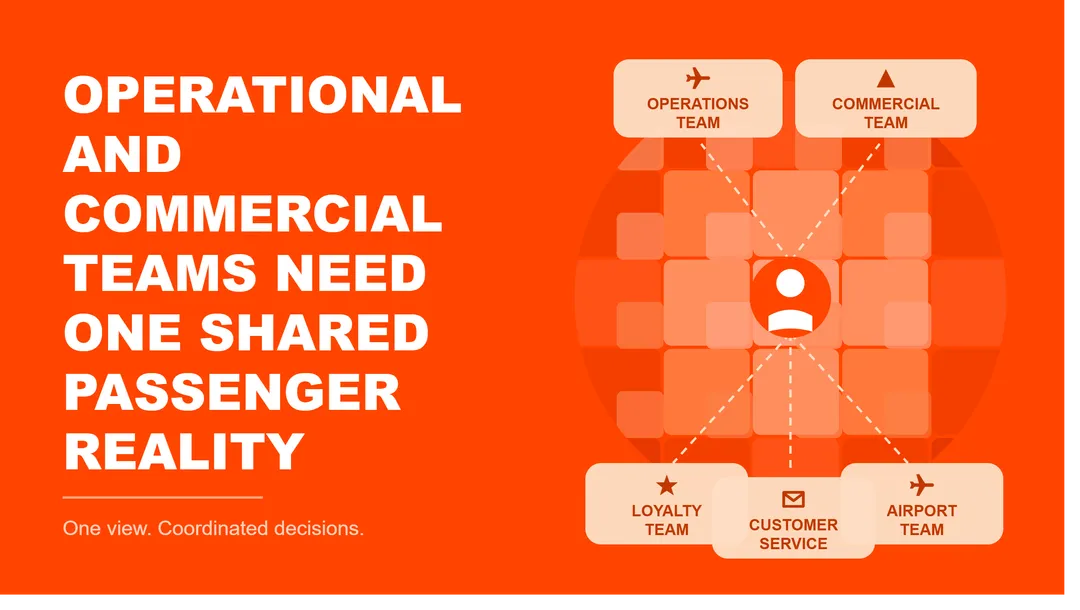
Modern airlines operate across dozens of specialized systems, and each of them performs an important role. But passengers experience only one airline.
This is why orchestration is becoming one of the industry’s most valuable capabilities.
Instead of replacing existing platforms, airlines can connect them into one intelligent decision environment.
An orchestration layer enables systems to:
- share customer context,
- synchronize operational events,
- activate behavioral signals,
- and coordinate decisions across departments.
This transforms disconnected information into actionable intelligence.
AI Becomes More Powerful With Context
The future of AI in aviation is not about replacing human decision-making but about enhancing it.
When AI has access to unified customer intelligence, it can help airlines:
- personalize experiences more accurately,
- prioritize passengers more effectively,
- improve ancillary conversion,
- automate repetitive processes,
- and respond to disruptions faster.
The technology itself is no longer the biggest challenge; context is.
The Opportunity Already Exists
Many airlines believe AI transformation requires rebuilding their technology landscape from scratch. In reality, the foundation often already exists.
Customer data, operational events, behavioral signals, and commercial insights are already available across the organization.
The opportunity is to connect them into a single, continuously updated intelligence environment.
The Future of Airline AI Is Data Activation
The next generation of airline AI will not be defined by who collects the most information, but by who activates it most effectively.
The airlines that succeed will be those capable of:
- connecting existing systems,
- orchestrating customer intelligence,
- enabling real-time decision-making,
- and transforming data into coordinated action across the organization.
Because the future of AI is not about having more data; it is about unlocking the value of the data airlines already have.