For years, customer intelligence in aviation was built around profiles.
Airlines collected customer information and stored it in centralized systems:
- demographics,
- loyalty status,
- booking history,
- travel frequency,
- and purchase behavior.
These profiles helped airlines understand who their customers were, but they revealed far less about what customers needed right now. And that distinction increasingly matters, because modern passenger behavior is constantly changing. The customer that booked a flight two weeks ago is not necessarily the same customer interacting with the airline today.
Passengers Are Constantly Evolving Throughout the Journey
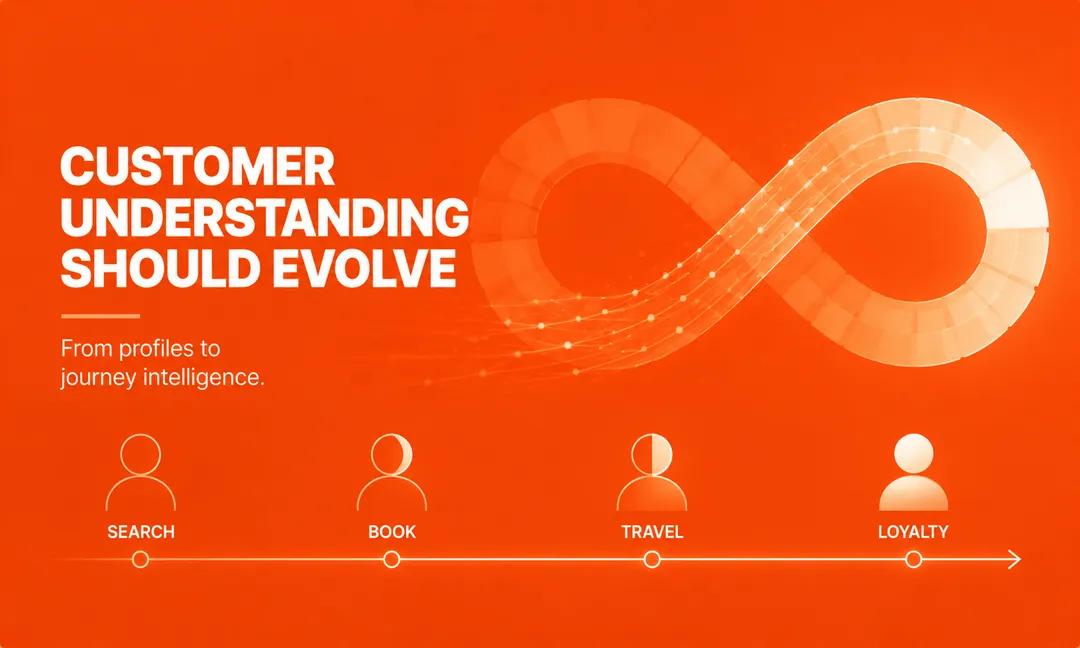
Customer understanding is often treated as a snapshot. In reality, it is a moving target: a passenger’s priorities can shift multiple times during a single trip.
Before booking, they may focus on:
- price,
- schedules,
- and flexibility.
Before departure, their attention may shift toward:
- baggage,
- seat selection,
- or travel preparation.
During disruption, priorities change again:
- rebooking,
- communication,
- and journey recovery become critical.
After the trip, loyalty engagement and future travel intent begin to matter. The customer has not changed, but the context has, and context is what drives behavior.
Static Profiles Cannot Capture Real-Time Intent
Traditional customer profiles are valuable, but they were designed to describe customers, not to understand them dynamically.
A loyalty tier tells airlines who a passenger is. It does not explain:
- what they are trying to accomplish,
- what concerns they currently have,
- what decision they are considering,
- or what action they are likely to take next.
This creates a growing challenge for airlines, because customer expectations increasingly depend on relevance, and relevance depends on understanding intent in real time. Static profiles provide history; modern customer intelligence requires awareness.
Customer Understanding Is Becoming Behavioral
The next generation of airline customer intelligence is driven by behavior.
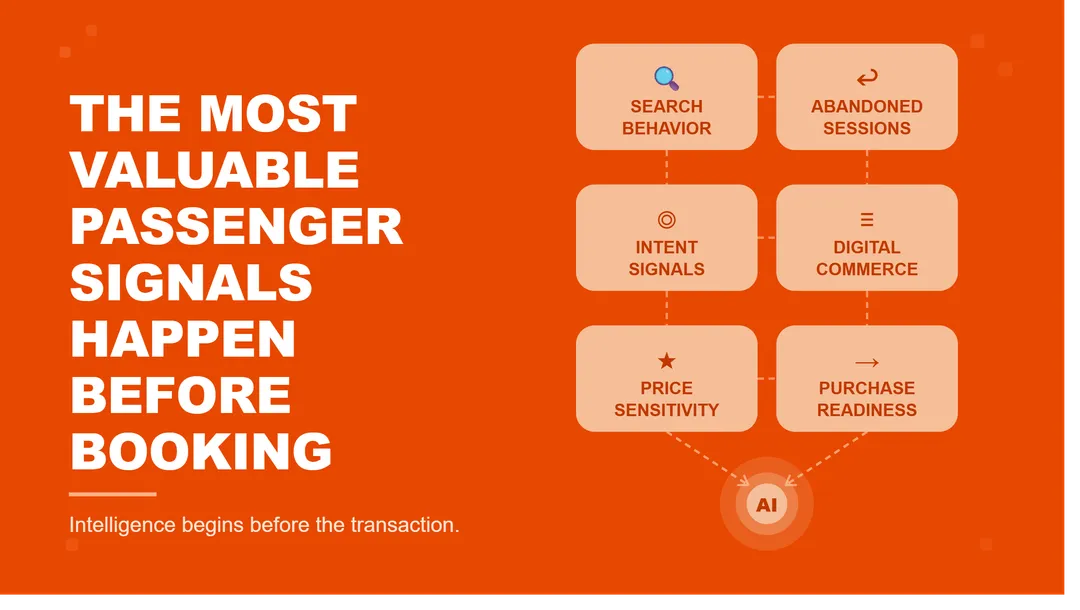
Airlines now have opportunities to understand:
- digital interactions,
- search patterns,
- browsing behavior,
- booking hesitation,
- ancillary interest,
- engagement activity,
- and journey progression.
These signals reveal far more than traditional profile attributes alone. They help answer questions such as:
- What is the customer trying to achieve?
- What information are they looking for?
- Where are they experiencing friction?
- What support might they need next?
Behavior transforms customer records into customer understanding.
Real-Time Identity Is More Valuable Than Historical Identity
Historically, customer identity focused on recognition: can we identify the passenger, match records, and connect transactions? Those capabilities remain important, but modern customer intelligence goes further.
Airlines increasingly need real-time identity: not simply knowing who the customer is, but understanding:
- where they are in the journey,
- what they are experiencing,
- how they are behaving,
- and what context surrounds their decisions.
This creates a far richer understanding of customer needs and enables more intelligent engagement.
Journey Intelligence Changes How Airlines Make Decisions
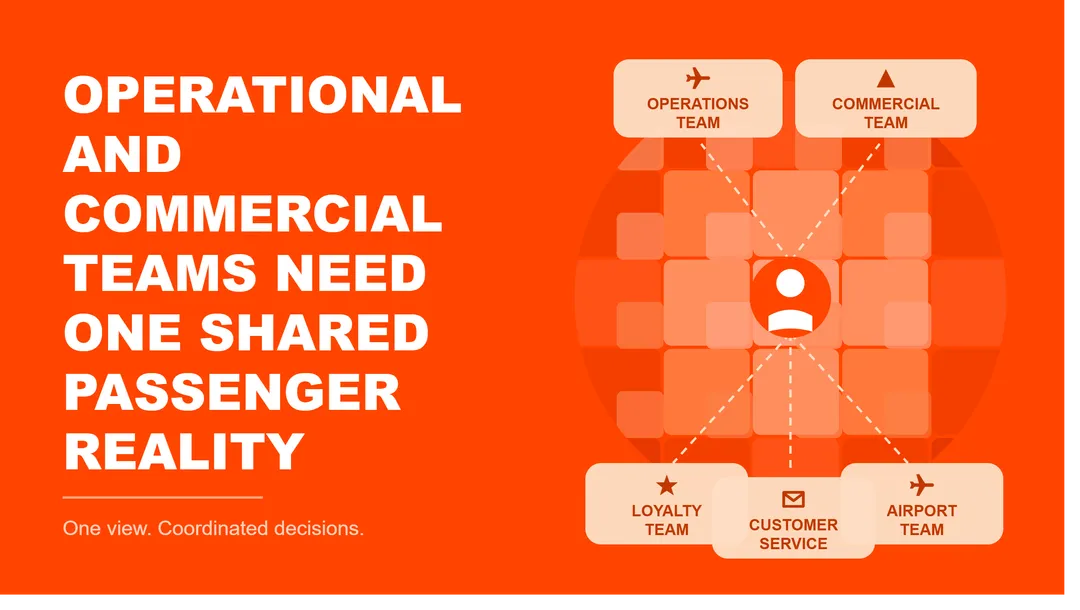
As airline ecosystems become more connected, customer understanding is evolving into journey intelligence. Instead of viewing customers as static records, airlines can understand journeys as living environments, where every interaction becomes a signal, every operational event adds context, and every behavioral change provides insight.
Journey intelligence allows airlines to connect:
- customer history,
- operational conditions,
- behavioral signals,
- loyalty context,
- and commercial opportunities
into a continuously updated understanding of the passenger. This creates better decisions across both customer experience and operations.
Continuous Understanding Creates Better Experiences
Passengers increasingly expect airlines to recognize changing circumstances. They expect interactions that feel:
- relevant,
- timely,
- contextual,
- and personalized.
These expectations cannot be met through static profiles alone; they require systems capable of continuously learning and adapting as customer needs evolve.
The goal is no longer simply to maintain accurate customer records but to maintain accurate customer understanding, and those are not the same thing.
The Future of Customer Intelligence Is Continuous
As digital journeys become more complex and passenger expectations continue to rise, airlines must rethink how customer intelligence is built. The future will not belong to organizations with the largest customer databases but to those with the deepest customer understanding.
The airlines that succeed will be those capable of:
- understanding customers continuously,
- adapting to behavioral change,
- recognizing context in real time,
- and making decisions based on current customer reality rather than historical assumptions.
Passengers are not static, their journeys are not static, and customer understanding should not be static either.